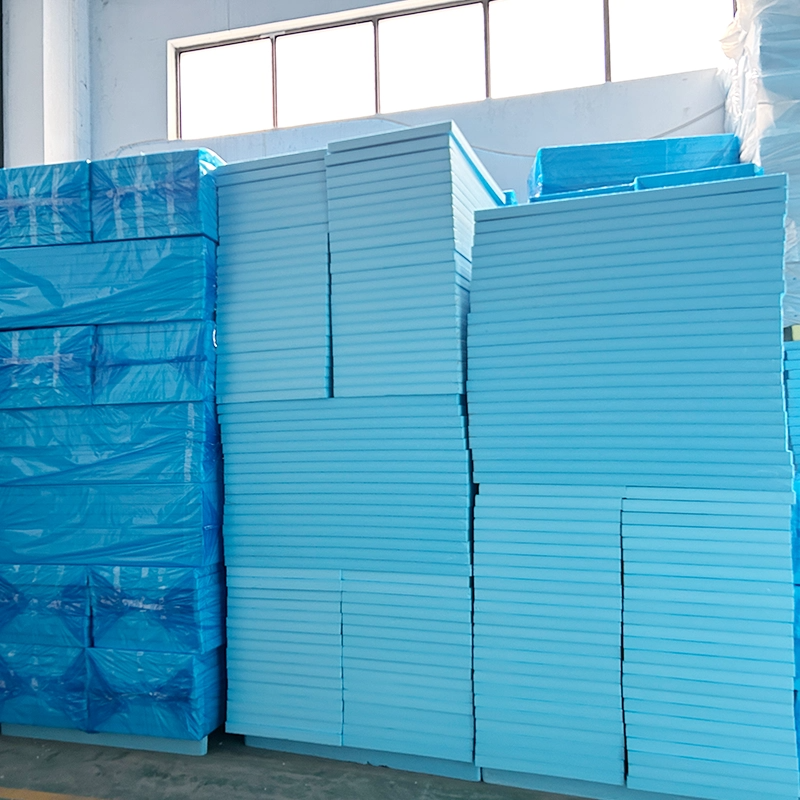
Selecting the appropriate thickness of extruded polystyrene (XPS) board is a critical yet often underestimated step in designing an efficient cold storage facility. This article breaks down the decision process into three main temperature zones—high (0 °C to 4 °C), medium (‑18 °C to 0 °C), and low (‑25 °C and below)—and provides corresponding thickness recommendations ranging from 60 mm to 200 mm. It highlights the importance of floor insulation for load‑bearing applications, explains why XPS’s closed‑cell structure and low thermal conductivity make it ideal for moisture‑prone cold environments, and offers a quick‑reference guide to simplify the choice. With an emphasis on balancing energy efficiency, usable space, and structural demands, the article aims to help readers avoid common pitfalls—like under‑insulating or over‑insulating—while keeping the process straightforward and even enjoyable.
READ MORE
Let’s face it: when you’re running a massive cold storage facility, keeping things cool isn’t just a suggestion—it’s the whole ballgame. Whether you’re storing ice cream, frozen peas, or life-saving vaccines, the name of the game is temperature control.
READ MORE
Hey there, foam fans! Have you ever found yourself wandering the aisles of a craft store, staring at a rainbow-colored stack of foam boards, and thought, "Wow, these are pretty handy... but just how thick are they, anyway?"Well, grab your safety scissors and a glue gun.
READ MORE
Hey there, fellow DIY enthusiast! So your XPS boards are looking a little worse for wear? Maybe you've got some dings from that "oops" moment during installation, or perhaps time and weather have done their thing. Whatever the case, you're in the right place! First Things First:
READ MORE
Choosing between 50mm and 100mm XPS (extruded polystyrene) foam boards is rarely just a thickness decision. Thickness affects thermal performance, system build-up, installation detailing, and overall project cost—but it must be matched with the right compressive strength grade, edge profile, and application method.
READ MORE
Underfloor heating can deliver stable, comfortable warmth—but only when heat is guided upward into the room, not lost downward into the slab. That's why a dedicated insulation layer is essential. XPS (Extruded Polystyrene) foam boards are widely used as floor-heating insulation because they combine excellent thermal performance, high compressive strength, and strong moisture resistance—all critical for long-term floor stability and efficient heat distribution.
READ MORE
Blue is better than white—right? Not so fast. In the real world of construction, the biggest performance differences in XPS insulation rarely come from color alone; they come from the product's compressive strength class, density, water absorption performance, and compliance with the standard your project must meet.
READ MORE
What's the most expensive "small mistake" in a cold storage project? It's often not the compressor, the doors, or the controls—it's choosing an insulation approach that slowly loses performance as moisture, load, and thermal cycling take their toll.
READ MORE